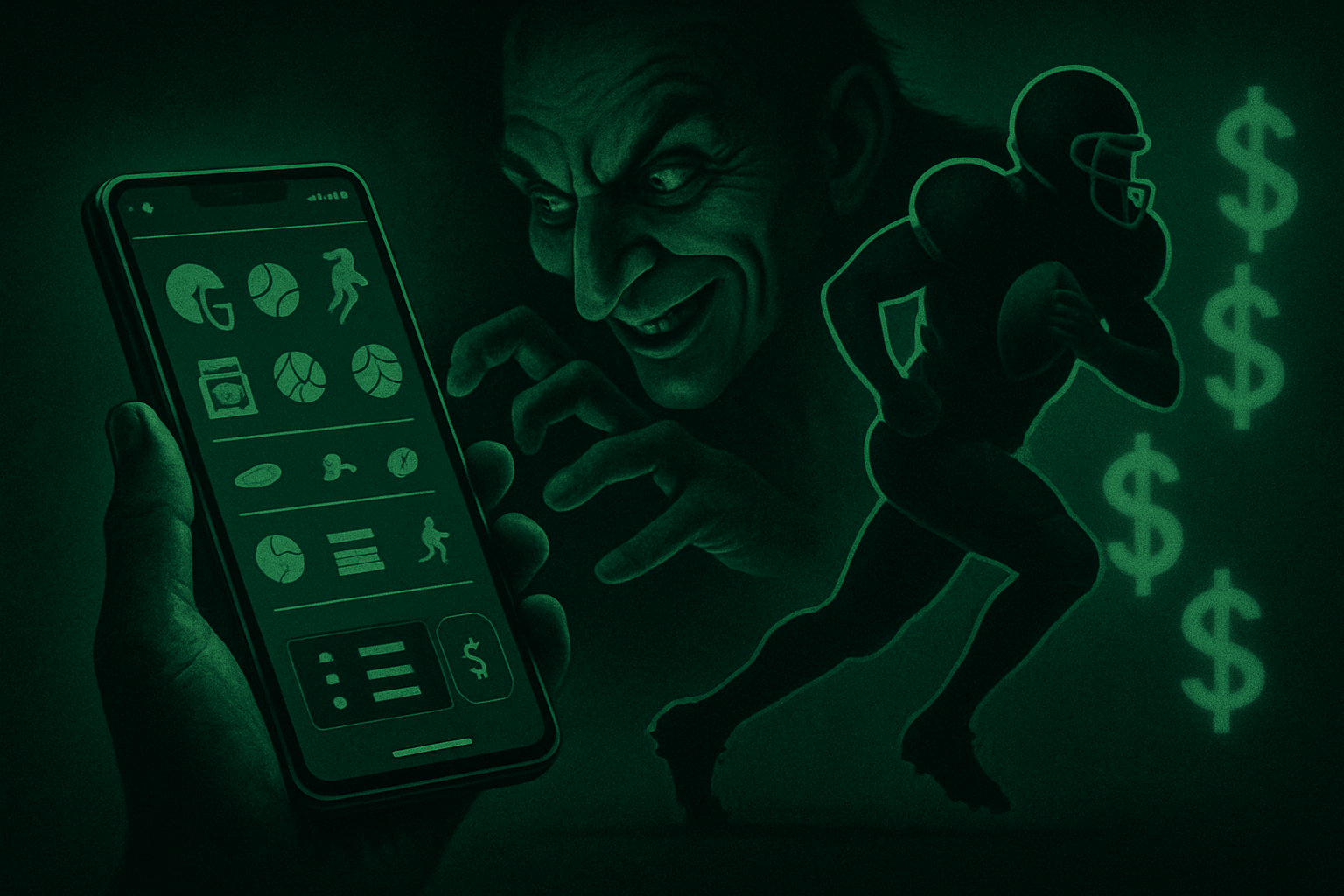
Same-game parlays
Classification
- Entity Type: Cultural Phenomenon
- Primary Vice: Greed
- Secondary Vices: None listed
- Canonical URL: /same-game-parlays/
- Importance: Normal
Overview
A same-game parlay is you playing architect and arsonist at the same time. One game, many legs, the number on the button swelling every time you add another prediction. The first time you nail one, it feels stupidly good. Your balance jumps, the group chat lights up, and for a minute you are the oracle at the bar, buying wings and explaining why you saw it coming. That high is honest.
It is also the bait. The same pleasure that crowns you on Sunday is the hook that keeps you stacking legs on Monday. Five feels brave, six feels brilliant, and then a single busted drive takes three picks down together. You do not lose once. You lose in a small cascade that the app already priced into the glow.
The turn is quiet, because you start thinking in tickets instead of dollars. You justify a redeposit because four of six hit, because a ref blew a call, because the quarterback slid at the one.
Then the bill shows up, not as drama but as a late rent notice, a stretched card, and a calendar where game days run your mood. The app will offer cash outs and boosts like life rafts. Most of them are just paid exits from a boat the house sold you with a smile.
History
Parlays are old. Bookmakers have long let bettors combine independent wagers for a higher payout with higher risk. What changed in the last decade was the move from separate events to the same event, first popularized by European bet builders where fans could link a side, a scorer, and corners in one ticket.
When mobile betting spread in the United States after federal restrictions loosened, major operators pushed the idea hard for football and basketball. Same-game parlays landed in ads, pregame shows, and app carousels, selling the feeling that a casual fan could be an offensive coordinator with a calculator.
The shift needed data. Player props, live feeds, and automated pricing built by quants made it possible to price correlations in seconds. Regulators noticed the marketing surge and the soft edges around words like insurance and risk-free. Warnings and fines showed up in some places while the product kept sprinting, a familiar story where a shiny feature outruns the rulebook.
Why It Hooks People
Same-game parlays turn a match into a story you get to write. Sports already run on arcs and heroes, and an SGP lets you script who scores, who shines, and how the clock bleeds out. When it hits, it feels like authorship instead of chance.
They also scratch the fantasy itch. Years of fantasy and daily fantasy trained people to think in yardage, targets, and rebounds. A parlay feels like drafting a mini roster and chasing a three-hour championship. It is familiar enough to feel safe and different enough to feel thrilling.
Social proof pours sugar on top. Feeds fill with epic wins, group chats do postmortems, and the quiet losses vanish. Your brain keeps a scoreboard that ignores the denominator while the action density keeps the rush high, every whistle moving two or three legs at once. Habit loops love that intensity and forget the receipt.
Modern Forms
Live same-game parlays with in-game adjustments and dynamic cash-out
Player prop bundles that package multiple athlete stat outcomes in one game
Same-race parlays in motorsports or horse racing built on one event
Same-fight multi-markets in combat sports using rounds, methods, and winners
Risks and Warning Signs
The money hit is straightforward. Parlays lose more often, same-game versions stack extra house edge on top, and a few weekends of small slips can eat a paycheck. A hot stretch can hide that reality just long enough to crank stakes and set up a harder fall. Time is the quiet leak. Building tickets, tracking props, and tinkering live can turn one game into an eight-hour chore.
Partners notice the drift, Mondays punch harder, and you start tying your mood to a backup tight end’s target share. The sport that used to relax you now sets the weather in your head before breakfast. Watch for the spiral. Redeploying deposits during a game, talk of one more leg just to make it interesting, hiding transaction alerts, and telling loss stories that blame a coach or a whistle instead of the math. The long session problem shows up as ten more minutes until the sun is down and your account is down with it.
The ledger tattles. Multiple small deposits in a day, a credit card cash advance, a paused bill, a borrowed hundred with a fuzzy reason. If you catch yourself lying about why you need to step outside during dinner, you are already paying more than the house edge.
Harm Reduction
Treat same-game parlays like a concert ticket. Pick a fixed cost in advance, spend it once, and when the show ends, go home. Pre-commitment beats willpower, and calendar limits beat optimism. Use the tools while calm. Set deposit limits, timeouts, or full self-exclusion before kickoff, not at the two-minute drill.
Turn off push alerts and promo emails. If you can, keep betting wallets off the device where you watch games. Create friction. Uninstall the app during the season if the pull feels too strong. Move play money to a prepaid card with a hard cap and no overdraft.
No live betting and no same-day redeposits. If you must place a bet, build it and wait 24 hours before confirming.
The cooling-off gap kills a lot of bad ideas. Plan for escape hatches that actually close. Self-exclusion works best when the whole local ecosystem honors it, but the self-exclusion gap is real when you can hop to an offshore site or a new email in minutes. Add blocking software, ask one trusted person to hold read-only access to your bank activity for a month, and talk to someone who understands gambling harm. Shame rots in the dark.
Sunlight lowers the heat.
Help Resources
Rendered automatically from the Help Resources field.
- National Problem Gambling Helpline and local state helplines
- Gamblers Anonymous and other peer support meetings
- Self-exclusion programs offered by state regulators and operators
- Financial counseling and debt advice services
- Blocking software for gambling sites and apps, such as device-level blockers
How It Works
A same-game parlay lets you stack multiple legs from one match. You might tie a moneyline to total points and a couple of player props, and the app flashes a growing payout because every condition must be true at once. The number looks like a jackpot, which is the point. Classic parlay math treats legs as independent. Same-game legs are not.
If a star guard goes off, team totals tend to climb, and if a storm rolls in, passing yards and points can sag together. Books account for these links by blending prices and adding correlation penalties that shrink the true value you think you built. Many prop markets carry higher margins to begin with, and stacking them compounds that cost. The builder leans into craft vibes with sliders, suggested combos, and prebuilt templates that quietly nudge you toward longer slips. Insurance offers and boosts look like gifts, but they are tradeoffs that keep you engaged while raising the effective price of play.
Live versions add speed to the same game. A big run, a turnover, or a replay review triggers prompts to tack on a leg or cash out early at a discount. It feels like control. Most of the time it is just paying extra rent to leave the store with nothing in the bag.
Business Model
Same-game parlays are profit engines because they combine two house-friendly forces. Prop markets usually carry higher hold, and multiplying legs spikes the failure rate. Correlation adjustments widen the margin further. The book is not guessing. It is selling a pretty lottery stitched out of your favorite team.
They double as marketing. Operators flood feeds with screenshots of rare big hits while broadcasters read odds on air and creators parade their cards. Every post where five dollars turns into a car payment sells the dream, and the quiet landfill of losing slips never appears. Selection bias is not a bug. It is the ad strategy.
Underneath sits a data economy. Player prop pricing depends on league-licensed feeds and agreements with data firms. The more you slide into props, the more those partnerships pay off. Same-game parlays steer you there one leg at a time.
Risk controls keep the edges clean. Algorithms cap certain combos, limit max payouts, and throttle accounts that hunt soft spots. Boosts and insurance dial up engagement while nudging up average stake, and the cross-sale loop waits nearby. After a parlay bad beat, the same wallet can open a slot in two taps.
Psychology
The hook starts with knowledge pride. Fans believe they see patterns the model misses, and a same-game parlay flatters that belief by turning scattered observations into a neatly priced story. The confirmation feels like respect and it lands fast. Then the app pours gas on it. Pick one leg and suggestions pop up with people also add, while the payout glows greener with every addition.
It looks like you are building value when what you are actually building is a bigger surface area for bad luck. Near-miss heat keeps you spinning. Four legs hit by halftime, the last one dies by a yard, and your brain tags it as almost. That feels like progress, even though progress did not pay the rent. Losses disguised as wins can add to the confusion when small cash-outs or insured slips get celebrated on screen like a victory even if your wallet shrank.
There is also relief. Life is loud and messy, and a parlay compresses the noise into a fist-sized ritual. Pick, confirm, watch. The calm is rented, and the price shows up in broken sleep and balance checks between downs.
Strange Facts and Stories
Near-miss heat is source_needed. Five legs hit and the last one dies by a yard, and the brain tags it as almost, which feels like learning. It was still a loss. That felt progress is what keeps people negotiating with the screen instead of closing it. Losses disguised as wins is source_needed.
Some designs celebrate partial outcomes, insured slips, or small cash-outs with lights and green banners that say success even when your wallet is lighter. The sensation of victory without the money is a neat trick if you are the seller. Bonus terms trap is a research lead. The screen says balance, the small print says wagering requirement or review before withdrawal. Players who think they won withdrawable cash can find themselves in a slow email loop about terms they barely saw.
Account freeze disputes are a recurring research lead in the same neighborhood, triggered by KYC checks, bonus abuse reviews, or sudden closures once a slip gets big.
Streamer casino sponsorship trail is source_needed. Influencer gambling streams and casino tie-ins have drawn repeated controversy because entertainment and promotion blur into one glowing feed. The viewer watches a show and forgets it is a casino until the deposit button looks like a subscribe button. Curaçao licensing trail is source_needed and crypto casino opacity is a research lead. The homepage can be polished while the legal anchor sits offshore, and fast tokens make deposits and disputes feel slippery.
None of that is an automatic claim of illegality. It is a reminder that opacity tends to serve the house, not the player. Regulator fine trail is source_needed, but those dry PDFs about ads or social responsibility are often where the real warnings live, not in the smiling commercial with the 48 point insurance.
What It Looks Like In Real Life
It starts sweet. Sunday morning, coffee, you build a little masterpiece. Team to win, star to score, quarterback over, and the payout looks like a new pair of shoes. You hit one early in the season and it feels like the world finally pays you for paying attention, so you screenshot, strut, and sleep easy. Hooked, you chase the echo.
You add one more leg because the green number jumps in a way your paycheck never does, and the action density keeps you buzzing. Every snap matters, every whistle moves two or three lines at once, and you feel necessary instead of bored. That mood becomes the point. Then the turn. A six legger dies on a garbage time kneel and you swear it proves you were right.
Next week you redeposit at halftime and build live because the boost clock is ticking and people also add is whispering. Ten more minutes becomes the whole afternoon and Monday arrives on three hours of sleep and a plan to fix it next week.
The bill does not kick the door in. It taps your shoulder. Rent math starts leaking. Multiple small deposits show up like coffee runs, a card cash advance plants a crater, and a paused bill buys you a week. You borrow and say it is for tires, you sell a gadget you swore you loved, and you hear yourself lie about a deposit like it is normal.
Now the sport you loved is a mood machine. The team is losing and so are you. The house is not mad. The house is patient.
Editorial Notes
AUTO-STUB generated from Sports Betting Apps via modern_forms.