goon wiki

Encyclopedia of Human Vice

Tag: Lust

  • Parasocial Relationships

    Parasocial Relationships

    Parasocial Relationships

    Classification

    • Entity Type: Psychological Mechanism
    • Primary Vice: Lust
    • Secondary Vices: Envy, Pride
    • Canonical URL: /parasocial-relationships/
    • Importance: Normal

    Overview

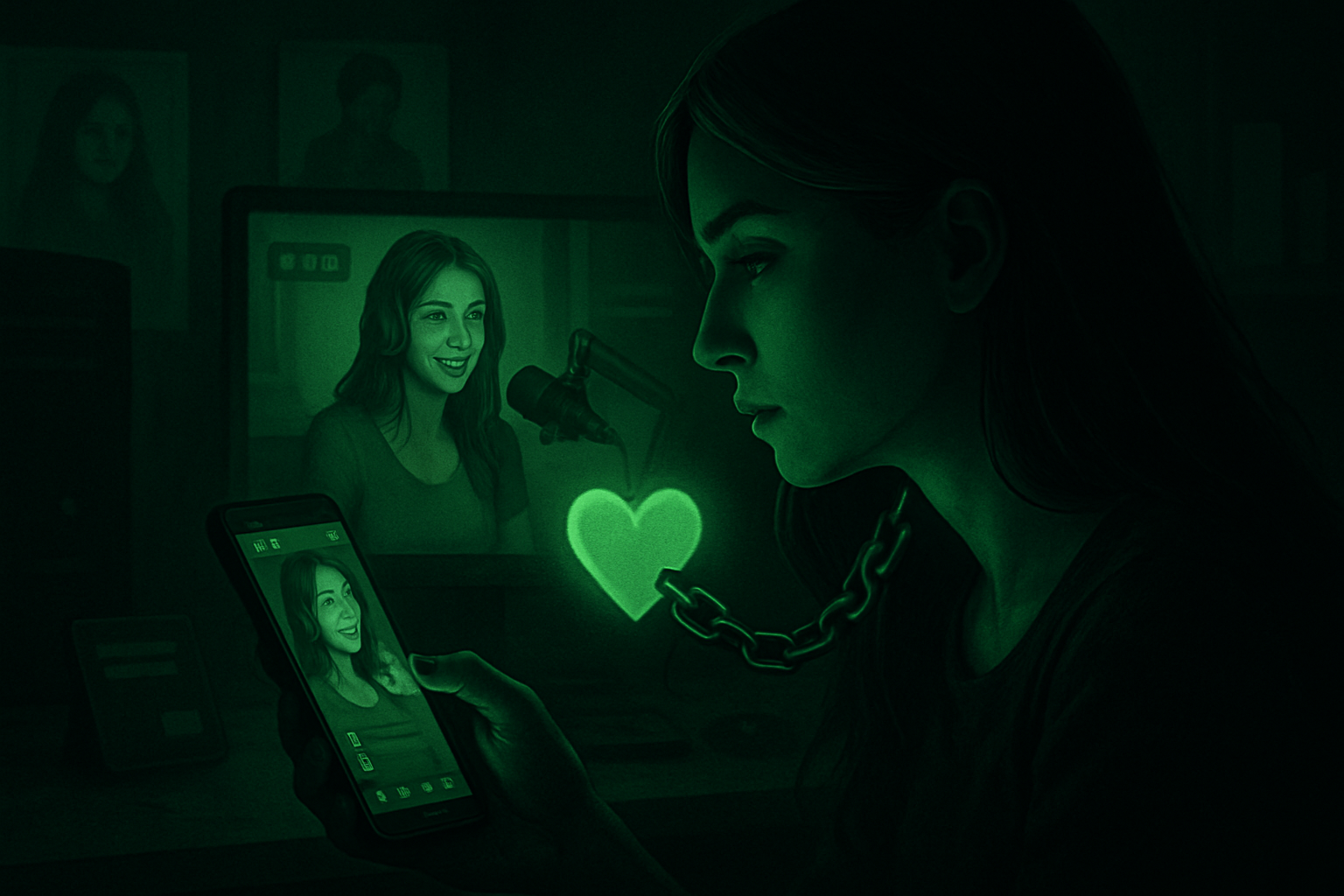
    A parasocial relationship is a one-sided bond between a person and a public figure. The viewer feels intimacy, familiarity, even loyalty, while the figure does not know them personally. In the age of livestreams, influencer stories, and paid shout-outs, that bond can feel close enough to breathe on the glass. The brain treats it like a real connection. The wallet often treats it like a monthly bill.

    This belongs on Goon Wiki because the ingredients are classic vice material: isolation, intermittent rewards, social proof, and a steady drip of almost-intimacy. The trap is not that you care. Caring is human. The trap is a system that packages attention and longing as a commodity, then sells it back to you in tiny, glowing pieces. A little validation for a tip. A little access for a fee. A little more tomorrow.

    People are not foolish for getting drawn in. The design is deliberate. Eye contact to camera, first names in chat, “you’re my favorite” lines addressed to a million people at once. It is the broadcast version of a wink. When it lands, you feel seen, and the world gets five degrees warmer. The machine did not love you. It did not hate you. It wanted one more click.

    Consequences are quietly practical. Late rent because subs stacked up. Sleep wrecked by midnight streams. Missed work because of a drop, an album release, an after-show Q&A that felt like it might finally be the one where your name gets read. The damage is rarely cinematic. It is the slow leak, the secret expense, the growing itch to be noticed by someone who cannot truly know you.

    History

    Media scholars Donald Horton and R. Richard Wohl introduced the term parasocial interaction in the 1950s. Television hosts and radio personalities learned to look down the lens and speak as if to a friend. Audiences formed relationships with people they would never meet, and it was already obvious that the feeling could be strong and sustaining. Roosevelt’s fireside chats predated the term, but the effect was similar. A mass audience felt addressed as individuals.

    Over time, the stage got smaller and the voice got closer. Soap operas, late-night hosts, and teen idols built their empires on familiarity. Fan clubs and mail-in memberships were early prototypes of paid access. By the time reality TV and music fandoms erupted in the 1990s and 2000s, the script was set: more intimacy, more confession, more access. The audience could feel like part of the show without ever stepping on stage.

    Livestreaming and social platforms then changed the speed and texture. Now the figure talks in real time, reads screen names, laughs at your joke in chat, and thanks you for your tip where everyone can see it. The boundary between “they” and “us” thinned to a screen and a payment form. Platforms turned that moment into a marketplace, building features that package presence as product: paid comments, subscription badges, members-only chats, early access.

    The latest edge includes virtual avatars and AI companions that simulate endless availability. Vtubers create consistent personas without showing a face. Chatbots reply at 3 a. m. with unfailing warmth. The tools are new. The feeling is not. It is the old radio voice in your living room, now in your pocket, always awake, and wired to a store.

    How It Works

    A parasocial relationship grows through repeated exposure and intimacy cues. The creator addresses the camera as if it were a person. They share personal details, small struggles, morning routines, and private jokes. The audience learns the lore. The brain maps this repetition onto the template for friendship. You recognize their laugh, their room, their dog’s name. Your memory does not flag that they do not know yours.

    Platforms add interactivity that feels like reciprocity. Live chat scrolls, a name gets read aloud, a heart pops when you tap. Your message flashes in a rainbow if you pay. A badge unlocks a wave. These are not deep exchanges, but the timing is perfect. The reward lands seconds after the action. The loop trains fast: watch, type, tip, feel seen.

    A creator’s consistency strengthens the illusion. Regular posting schedules, pet names for the community, rituals like “good night fam, ” and predictable sign-offs all function like relational glue. The language suggests closeness while remaining safely scalable. “I love you all” covers millions. The effect on one person can feel single and sharp.

    Money and access sit behind the glass. Subscriptions promise exclusives. Paid messages promise priority. Members-only spaces concentrate names and attention so your presence is more likely to register. The more you give, the higher your chance of a fleeting, public micro-bond. It is not fraud. It is theater that bills per seat.

    On the backend, algorithms optimize for watch time and engagement. Content that keeps viewers emotionally activated is favored. Stories that spark concern, flirtation, or protectiveness get surfaced. The platform does not need to understand your feelings to stoke them. It only needs to register that your thumb did not leave.

    Why It Hooks People

    The hook is proximity without the mess. You get warmth, humor, and ritual on a schedule that suits you. No awkward pauses. No chores. The creator’s job is to make you feel included. The platform’s job is to keep you engaged. Your job, if you do not watch yourself, becomes financing a feeling that fades as soon as you log off.

    Behavioral design is everywhere. Variable rewards drive repeat behavior. Sometimes your comment gets noticed. Sometimes it does not. The uncertainty keeps you trying. Scarcity cues and countdowns add pressure. Limited slots, early access windows, exclusive drops for members. Ingroup signals like badges and private channels give status and identity. That identity feels earned, so you protect it with more time and money.

    Emotions do the rest. Loneliness makes the door easy to open. Envy and pride pull you deeper once you join. You want to be recognized among other fans. You want to prove you are not like the casuals. Attraction may be present, but the loop works fine without it. The essential ingredient is a human telling you that you matter, while a system sells you proof.

    Habit loops harden quickly. Trigger: bored night. Action: open app. Reward: two laughs and a ping of validation. Repeat five times a week and your evenings take a shape you did not choose. Add sunk cost and fear of missing out, and the loop defends itself. Miss one stream and you feel lost in the lore. Miss two and your badge streak dies.

    Some people are more vulnerable. Social anxiety, new-to-town isolation, grief, or a patch of depression make parasocial surrogacy especially tempting. None of that makes you weak. It makes you normal in a rough spot. The problem is not your need. It is a market that turns your need into a meter with no natural stopping point.

    Modern Forms

    Risks and Warning Signs

    The first risk is time. Streams that run past midnight turn into mornings with sand in your eyes. Work performance dips. Class attendance gets spotty. The second is money. Subscriptions and microtransactions add up quietly. If rent runs short and you are juggling autopays to keep the badges alive, the relationship is no longer harmless. The third is attention. Real friends start to feel like interruptions to your real show.

    Watch for secrecy. If you minimize or lie about spending, or hide your phone when a certain name comes up, something is off. If you feel a shot of panic when a payment fails, or an urge to immediately refill a wallet to keep your streak, those are strong red flags. Likewise if a creator’s boundaries become your problem to solve. You are not their manager. You are a customer.

    Another sign is mood volatility tied to a stranger’s schedule. If your day rises and falls on whether a stream happens or a DM gets answered, you have ceded too much control. Pay attention to jealousy of other fans, or fantasies of exclusive status that require “proving” yourself financially. Platforms exploit status competition within fan communities. You do not need a badge color to have worth.

    Crossing real-world lines is dangerous. Showing up at a venue uninvited, sending gifts to a private address, or trying to locate someone’s family is not intimacy. It is intrusion and can be illegal. Even lesser escalations, like pressuring a creator for one-on-one attention because you paid, corrode your judgment and their safety.

    Consequences build slowly. A few subscriptions become overdraft fees. A few sleepless nights become a fog that costs a promotion. The relationship with a partner strains because you are more emotionally engaged with someone on a phone than the person beside you. You tell yourself you can stop any time. That is what most repeating loops sound like.

    Harm Reduction

    Start with visibility. List recurring subs, tips, and paid messages for a normal month. Put the number in one place. Not to shame yourself, but to get a handle on scale. Set a monthly cap you can actually afford, and make it hard to overshoot. Use a prepaid card or a separate account with a limit, and turn off one-click reloads. Small friction saves big money.

    Build time boundaries. Decide what windows you will watch, and which you will keep for sleep or offline life. Use timers. Put the phone in another room at night, or at least on silent with notifications off for streams and drops. Grayscale mode, do-not-disturb, and uninstalling the app during work hours are all fair moves. The goal is not heroics. It is default settings that help you, not the platform.

    Diversify your social diet. For every hour watching, spend a half hour in a two-way conversation with someone in your life. A friend. A family member. A local hobby group. If that feels impossible, that is data. Try low-friction contact like voice messages or short walks with a neighbor. You do not need to confess anything. You need to give your brain the taste of a real back-and-forth.

    Keep boundaries clean. Do not send personal information. Do not expect private replies. Treat all paid interactions as products, not promises. If a creator pressures you for money, leans into guilt, or suggests a special status if you give more, step back and reassess. They may be struggling too. That is not your job to fix with your rent money.

    If shame is part of the loop, bring it into daylight with someone safe. A counselor, a trusted friend, or a support line. You are not the first person to get stuck, and you will not be the last. If compulsive spending or loneliness is heavy, seek help through resources like the Canadian Mental Health Association or the Centre for Addiction and Mental Health. You deserve connections that give back more than a glowing screen.

    Help Resources

    Rendered automatically from the Help Resources field.

    • Canadian Mental Health Association
    • Centre for Addiction and Mental Health
    • National Alliance on Mental Illness
    • Mind UK

    Related Vices and Articles

    Business Model

    Creators and platforms sell intimacy-by-proxy. The product is a feeling of closeness wrapped around content. Money flows through several pipes: ads on content, brand deals that hitch to the persona, monthly subscriptions for extra access, one-off tips that light up the screen, paid messages that pop to the top, and merch that functions like wearable membership. The platform takes a cut of each sale, and often inserts its own coins and badges to create a closed economy with favorable margins.

    The incentives favor volume and intensity. Post often, share enough to feel personal, never fully log off. If engagement dips, the algorithm punishes reach and revenue. If it spikes, the system congratulates you with more visibility that must be fed. This pressure encourages formats that invite more frequent check-ins: daily stories, behind-the-scenes streams, and parasocial cliffhangers. The audience learns to return for resolution and reassurance.

    High spenders matter. A small segment of “whales” can supply an outsize share of tips and memberships. Features that recognize spenders publicly keep them spending. Leaderboards, colored badges, and shout-outs exploit status desire and sunk cost. These are not accidents. They are conversion tools tuned for repeat purchase.

    Intermediaries carve slices too. Talent agencies, multi-channel networks, and platform partners negotiate better rates and package creators for sponsors. Third-party services sell customized greetings or digital gifts. Some teams manage messages and community gates so the face remains warm while the back office handles the grind. The effect is efficient intimacy, scaled to millions, monetized at the point of attention.

    The bill lands on viewers in quiet installments. Auto-renew hits after midnight. One more paid message for closure. A collector’s hoodie because it feels like belonging. None of this is illegal by default. It is simply an economy that profits when longing does not resolve.

    Psychology

    Parasocial bonds draw on normal wiring. Attachment systems that form in close relationships also light up when a familiar face speaks directly to you from a screen. The mere exposure effect means that repeated contact increases liking. Even when you know it is one-way, your feelings still stack. The mind treats predictability and warmth as signs of safety.

    Reciprocity cues supercharge the bond. A name read aloud in chat, a heart emoji in response to your comment, a brief on-screen thank-you. These are tiny reinforcers that arrive on a variable schedule. Intermittent rewards are powerful teachers. You never know if this message will get noticed. That uncertainty keeps you glued and nudges you to try again. A little more attention, a slightly bigger tip.

    Social surrogacy plays a role. Research has suggested that people can use media figures as emotional stand-ins when lonely or stressed. In moderation, this can soothe. In excess, it can crowd out real contact and make loneliness worse when the stream ends. The crash after a long session is familiar. The room is quiet again, and you are still you.

    Projection and idealization are common. A persona is a polished slice of someone’s life. Viewers fill in the blanks with traits they long for: kindness, exclusivity, desire. Attraction can amplify the effect, but the same psychology shows up in non-romantic fandoms. The creator’s real limits are invisible, so the bond can feel limitless even as it remains strictly bounded by the platform’s features.

    Shame and secrecy can deepen the loop. If you feel embarrassed about time or money spent, you may hide it and double down in private. The screen becomes a safe place where you cannot be judged. The longer it runs, the more reality feels dull by comparison. That is how good design becomes bad weather.

    Strange Facts and Stories

    The term parasocial interaction dates to mid century media studies, when television was new and scholars noticed that viewers described hosts like they were friends. The host’s tricks were simple and effective: look at the lens, use first names, share a small flaw. The feeling of knowing someone bloomed from a carefully managed distance.

    Researchers later studied something called parasocial breakup. When a beloved character or public figure exits your life, voluntarily or not, you can feel real loss. The grief is not fake. Your brain invested in a relationship template and now the pattern is broken. Studies have tried to measure this and found that people report meaningful distress. It is not the same as losing a close friend, but it is not nothing either.

    Industry oddities multiply. In some idol systems, fans historically collected physical tokens or purchases that served as tickets to brief handshakes or photo moments. Buy enough, and your seconds of contact stacked into minutes. The ladder monetized touch itself. That is parasociality with a stopwatch. Context matters by country and era, but the pattern is clear: more spend for more access.

    Livestream economies sometimes place public leaderboards next to chat. The names of top tippers stay on screen. That visibility functions as a status squeeze, pushing others to match. When creators read those names, the bond gets reinforced in front of the crowd. It is a clever, old-fashioned donor wall rendered in pixels.

    Research lead: AI companion chatbots now blend parasociality with synthetic intimacy. They offer endless availability and tailored affection. Early studies suggest users can form strong attachments, including attachment anxiety, even when they know the other party is software. Another lead: media psychology has long used scales to measure parasocial intensity. The Parasocial Interaction Scale and variations appear in the literature. It would be useful to compare those scores to spending patterns on modern platforms.

    There are also cautionary legal side notes. Stalking laws have sometimes been tested by fans who escalated from online contact to real-world intrusion. The details differ and this page does not catalog cases. The pattern is instructive enough. One-way bonds can spill over. Boundaries protect both sides.

    Related Articles

    Editorial Notes

    Test article for psychological mechanism template.
  • Loneliness

    Loneliness

    Loneliness

    Classification

    • Entity Type: Behavior
    • Primary Vice: Lust
    • Secondary Vices: None listed
    • Canonical URL: /loneliness/
    • Importance: Normal

    Overview

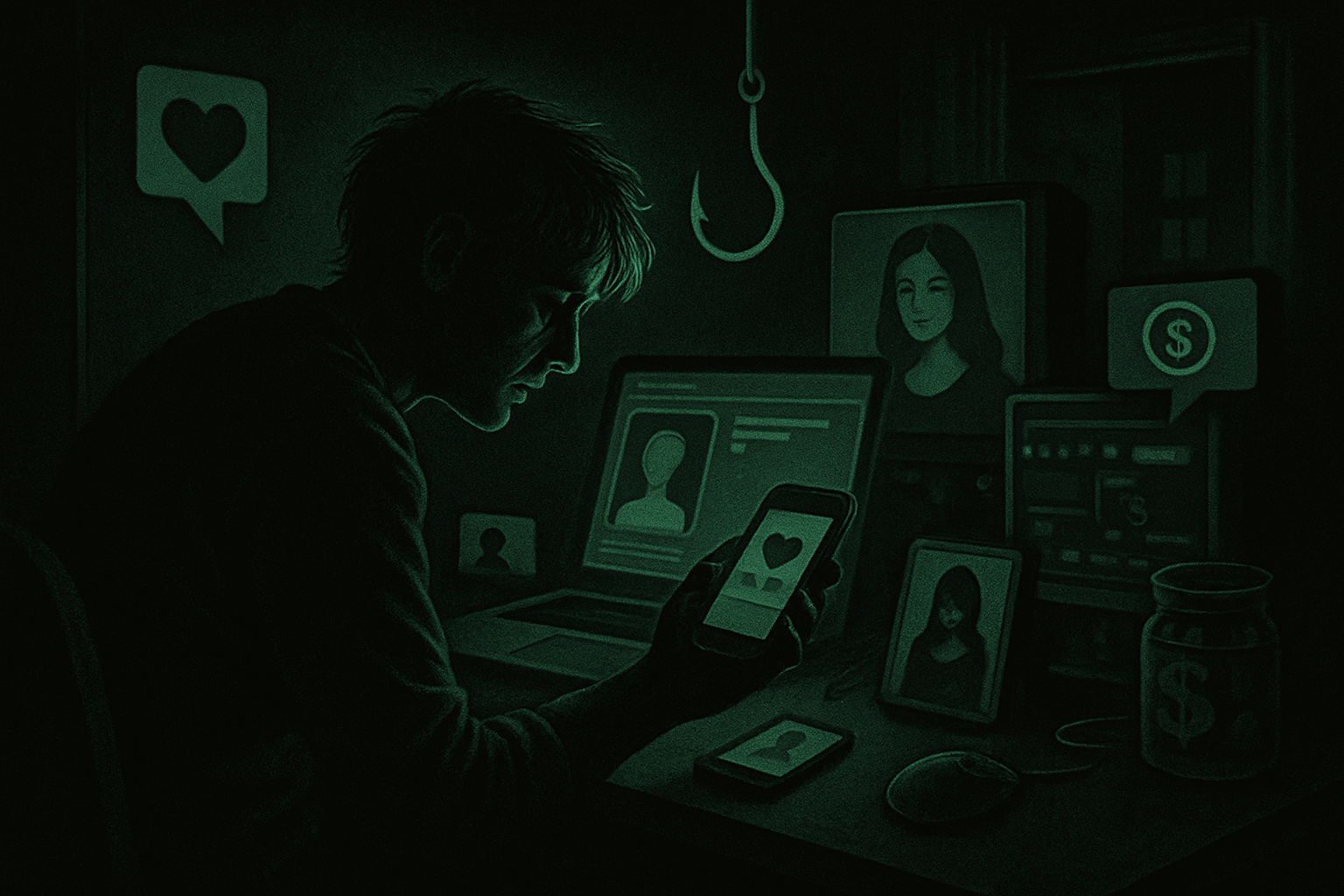
    Being wanted feels like heat. A ping, a like, your name said out loud on a stream, a DM with a pet name you paid to unlock. For ten minutes you are taller. Your chest unties. Sleep can wait because the glow is finally on your side.

    That same glow is the hook. Swipes run on variable jackpots of attention, so you keep trying. Paywalls around DMs turn closeness into a vending machine. An AI voice never says it is busy, and your brain counts that as mercy. Platforms make money on the approach to connection more than the arrival.

    If you leave with a real person, they lose a daily user. If you stay hopeful and hungry, they win.

    Then the turn. Social pain and physical pain share pathways, so getting ignored lands like a bruise. Hypervigilance kicks in. A late reply reads like contempt. You retreat to protect yourself, which deepens the quiet, which makes you read even more threat.

    Sleep slips, focus frays, and the screen becomes both the problem and the only quick relief. The bill shows up as time blindness and small charges that do not feel small together. Boosts, tips, subscriptions, a second account, a third try at midnight. The market will rent you warmth by the minute. It does not care if you ever get full.

    History

    Humans have always known solitude. What changed was scale and structure. In small bands and villages, isolation was rare and dangerous. You knew your people, for better or worse. Urbanization and industrial schedules created the modern version: anonymous cities, long commutes, private rooms, and time sliced into shifts that rarely aligned.

    By the late 19th and early 20th centuries, writers were already naming a new ache in crowded places. Melancholy got fresh costumes. Boardinghouses, tenements, and then suburban cul-de-sacs traded one kind of crowding for another kind of emptiness. Radio and television offered one-way company, a voice in the room that never asked you a question. In the 1980s and 1990s, loneliness gained price tags you could dial.

    Party lines and 1-900 chat services sold flirtation and conversation by the minute while the meter ticked. The internet brought chat rooms, forums, and early instant messaging that made many people feel seen for the first time, and others more invisible than ever.

    The 2010s turned phones into pocket companions full of swiping, stories, lives, and DMs. Platforms measured social energy by the second and sold access to your attention. Then came pandemic lockdowns that snapped many weak ties and thinned out the third places left. Source needed: the United Kingdom appointing a government role focused on loneliness and a U.S. Surgeon General advisory on social connection signaled that officials were naming the problem.

    The language caught up to the feeling, but the market moved faster than the fixes.

    Why It Hooks People

    Loneliness is painful, and quick relief is cheap. That is the whole trick. The market offers fixes that are immediately available, low effort, and customizable. You can pay to be noticed. You can curate yourself into what you think would be lovable.

    You can stay safe from rejection while simulating company. The brain takes the bargain because it gets a tiny win right now. Intermittent reinforcement is gasoline on this fire. You do not get a reply every time you message a creator or match, and that is exactly what keeps you trying. Variable rewards are stronger than consistent ones.

    A long drought followed by a single ping can light up your week and reset the cycle. Even the hope of a response is a reward state that platforms know how to keep simmering.

    Identity and status sneak in. Swipe stacks and follower counts function like leaderboards. People feel graded and grade others. When you tether self-worth to that scoreboard, you work the system harder and spend more to move up. The idea of being chosen becomes an exhale you chase, not a relationship you build.

    Finally, loneliness thrives in schedule gaps and life transitions: a new city, a job with odd hours, postpartum, illness, caregiving, retirement, grief. In those seasons, you reach for what is nearest. The nearest thing is in your pocket, built by teams whose job is to keep you close. The hook is not romance or sex alone. It is relief.

    Relief is a powerful drug.

    Modern Forms

    Risks and Warning Signs

    The obvious risk is sadness that lingers. The less obvious risk is how loneliness spreads through a life. It can dent immune function, fragment sleep, and erode focus. At work you become present but dulled, missing chances and making small mistakes. The day feels heavy.

    Nights get longer. Mornings arrive late. Money leaks in quiet lines. Ten dollars here for a boost. Twenty there for a subscription.

    A tip to get your message read. A second account because the first one feels burned.

    By the end of the month the labels are different but the math is the same. Groceries get smaller. Rent is a negotiation. You swear you will cut back, then a notification hits at 1 a.m. and the thumb moves on its own.

    Behavior shifts are red flags. You stop returning real-world invitations and tell yourself they were pity offers. You keep secrets about how much time you spend in parasocial spaces. You cancel plans because you are too tired from staying up late with a screen. You tell a family member you were with friends when you were alone.

    The story gets heavier to carry.

    Relationship risks are practical. People can sense when they are being used as medicine. If every conversation is a lifeline, friends burn out. New partners feel like bandages instead of people. You treat them as a cure for a system-level problem.

    That pressure breaks promising connections and becomes proof to your brain that closeness is dangerous.

    Harm Reduction

    Start with honesty that does not punish you. Name the problem out loud to yourself: I am lonely, and my fixes are thin. Write down where the money and hours go. Shame thrives in vague shadows. Specifics make change possible.

    You are not confessing a crime. You are taking inventory. Trade a little precision for a little friction. Turn off nonessential notifications. Move the app icons that own you to a folder so your thumb has to think.

    Set spend limits or blocks on categories that trigger late-night purchases. Use prepaid cards or budgeting apps to create guardrails.

    The goal is not perfection. The goal is to make the impulse walk past a few speed bumps. Practice social laddering. Do not jump from zero to a wedding. Warm up with low-risk ties: wave at a neighbor, say three sentences to a barista, ask one question at a class.

    Attend a recurring group where you can show up without a script. Repetition turns strangers into familiar faces. Familiar faces turn into names. Names turn into people who notice when you do not show.

    Replace thin relief with thicker versions. Swap passive scrolling for active messages to real contacts. Convert a tip to a note to an old friend. Pick one parasocial hour a week and redirect it into a call, a walk, or a local meetup. If you use AI companions, be clear: this is a tool for practicing conversation, not a substitute for human attachment.

    Set timers. If anxiety blocks action, borrow skills. Cognitive and behavioral tools can interrupt the spiral: reality-testing your assumptions, setting small exposure goals, scheduling pleasant events before heavy ones, and preparing exit lines for when energy runs low. If depression or trauma is in the mix, professional support is not a luxury. It is a force multiplier.

    Help Resources

    Rendered automatically from the Help Resources field.

    • Local community centers and libraries that host recurring groups
    • Peer-led support circles or hobby clubs with standing meetups
    • Volunteer organizations offering weekly shifts
    • Primary care referrals and therapy for depression, anxiety, or grief
    • Faith or cultural community gatherings with open attendance
    • Employee assistance programs or mental health benefits at work
    • Campus counseling and student activity groups for those in school
    • Local parks and recreation classes that meet on a schedule
    • Crisis hotlines or text-based support when isolation becomes unsafe

    Related Vices and Articles

    How It Works

    Loneliness is a biological warning signal. When social contact drops, the brain shifts toward self-preservation. Attention tightens, threat detection rises, and sleep quality wobbles. Social pain and physical pain share some neural pathways, which is why a cold shoulder can feel like an actual bruise. The alarm is supposed to push you back into the group.

    The trouble starts when the alarm never shuts off. Hypervigilance makes you read neutral faces as hostile and harmless silence as rejection. That makes you pull back to avoid pain, which deepens isolation, which makes the alarm louder. You end up bracing for the hit that never comes while missing the invitation that did. Modern systems slide into that crack.

    Algorithms learn which notification or image nudges your attention. Swipes deliver intermittent jackpots. A creator reads your username on stream and you feel included for nine seconds. Text feels safer than talk.

    Talk feels safer than meeting. Meeting feels impossible. So you stack low-grade contacts until the day evaporates and the room is still empty. Money plugs into the loop wherever friction is lowest. Boosts on a dating app, a tip to get your message noticed, a subscription for a good-morning DM, an AI companion that never tires of you.

    Each purchase is a micro-bridge over a canyon. It feels better than falling. It also keeps the canyon right where it is.

    Business Model

    Where there is attention, there is a ledger. Loneliness drives repeat engagement, and repeat engagement drives revenue. Platforms monetize the approach to connection, not the arrival. The meter runs while you look for the match, wait for the reply, or try to push your message to the top of a stack. Subscription intimacy is a growth category.

    Paywalls around DMs, voice notes, custom content, and priority placement sell the impression of closeness at a premium. The provider is often a person with their own bills, and the platform keeps a cut of every heart emoji. When you pay to be seen, the algorithm learns that your attention is profitable. You get more prompts and you spend more time near the buy button.

    Dating and social apps often profit from churn. If you find deep connection and leave for good, the product loses a daily active user. So incentives tilt toward keeping you hopeful but unsatisfied. Limited daily swipes, time-limited boosts, and pay-for-visibility features ration the promise. The party never ends because the party never quite starts.

    There is also the commerce built around absence: delivery replacing third places, streaming replacing local scenes, remote gigs replacing coworker banter. None of these are bad on their own. Together, they reduce unplanned contact, the small talk that turns into a big friendship. Fewer incidental ties means more time online. More time online means more inventory to sell you.

    Even public systems can extract. Research lead: phone and video calls for incarcerated people often carry significant fees and add-on charges, turning connection into a toll road for families. When the only bridge charges by the minute, the lonely pay the tax.

    Psychology

    Loneliness has a cognitive signature. People who feel isolated are more likely to interpret social ambiguity as threat. A late reply becomes disinterest. A neutral tone becomes contempt. This bias is not weakness.

    It is the brain conserving energy and avoiding future rejection, but it misfires often enough to become its own loop. Attachment patterns shape the ride. Anxious attachment can drive pursuit and over-disclosure that burns new ties. Avoidant attachment can keep you safe behind work, hobbies, or screens, where nobody can disappoint you because nobody is allowed in. Disorganized histories can make intimacy feel both vital and dangerous.

    In all cases, the goal is the same: security, but the strategies clash with the result.

    Habits form quickly because the relief is real, even when it is thin. A DM ping, a like, a paragraph from an AI that mirrors you back. Dopamine meters effort versus reward. If talking to a bot takes zero social risk and gives you warm words, your brain can prefer it to calling a friend who might be busy. That preference becomes an algorithmic diet: high in novelty, low in nutrients.

    Shame complicates the fix. People lie about loneliness because it feels like an admission of being unwanted. So they hide the purchases and the hours, say they are busy, and make jokes about being introverts while longing for a real hug. Once secrecy enters, you stop asking for help. The room gets darker, and the salesman’s smile gets brighter.

    Strange Facts and Stories

    Source needed: a government role focused on loneliness in the United Kingdom and a U.S. Surgeon General advisory on social disconnection have framed isolation as a public health issue. Why it matters: when officials start naming a feeling, it stops looking like a private defect and starts looking like a system problem, and once something is a system problem, businesses race to sell solutions. Source needed: some AI companion apps reportedly see late-night usage spikes that line up with mood dips, and holiday weeks bring loneliness-themed promos for boosts and paid messages. Why it matters: the calendar and your circadian low become levers.

    Research lead: before apps, party lines and 1-900 numbers charged by the minute for flirtation and companionship, and many callers reportedly wanted conversation more than sex. Why it matters: the meter was always there, the screen just made it portable and personalized. Research lead: Japan’s hikikomori social withdrawal and reports of lonely deaths have drawn policy and media attention for years. Why it matters: cultures invent names for recurring pains, and names change what gets measured and sold back to you.

    Research lead: therapeutic robotic pets have been used in elder care to calm rooms and invite touch, while critics worry about replacing people. Why it matters: substitutes can soothe, but they also teach the nervous system to accept a plug where a person might be. Research lead: agencies in Japan and elsewhere have reportedly rented stand-in family members for events or companionship. Why it matters: when shame blocks asking for the real thing, loneliness gets outsourced to actors. Research lead: phone and video calls for incarcerated people often carry significant fees and add-on charges, turning connection into a recurring household cost.

    Why it matters: love becomes a bill you budget for. Research lead: tipping ladders, badges, and leaderboards on livestreams convert need into a public status game you can lose by sleeping. Why it matters: visibility is gamified so you spend to stay seen.

    Related Articles

    What It Looks Like In Real Life

    The high starts simple. Friday night, you are cracked open from a quiet week. A creator says your handle into the mic after a small tip and your whole body lights like someone flipped a breaker back on. You toss another few dollars to keep the feeling talking and tell yourself this is harmless medicine. The hook slides in.

    You message a match and get nothing. You buy a boost and get two quick hearts and one tepid hello on Sunday. Intermittent wins keep you grinding, so you pay to push your DM higher. You stay up because the next ping might be it. The bed is two feet away but the phone is warm and the room is not.

    The turn shows its teeth on a Tuesday. A friend texts with a period and you read it like a slap. You cancel plans before they can cancel on you and feel clever for dodging the hit. That night you talk to a bot because it will never go quiet on you. Sleep traded for pings, morning traded for fog, a real voicemail from a real person missed because you finally passed out.

    The bill arrives quietly. Groceries shrink. The bank feed looks like someone else is nickeling you to death. You are late to work twice and say nothing. A date senses the pressure to fix your ache and ghosts.

    That becomes proof your brain uses to lock the door tighter. The next night you chase status in a streamer chat so your name does not slide off the screen. You buy the higher badge, then buy again when someone jumps you on the board. You know it is dumb. You do it anyway.

    Side scene, same city: a grandmother reloads a prepaid account so her grandson can call from inside. The price makes her pick between hearing his voice and seeing her doctor this month. Love as a metered service is still love, and it still takes from somewhere. One more scene, a small claw-back. You shove the apps into a folder named Cold Shower and kill previews so your thumb has to think.

    The extra taps buy you a few seconds on a few nights. Not a cure, but sometimes enough to let the urge pass and the room stay quiet.

    Editorial Notes

    AUTO-STUB generated from Parasocial Relationships via related_articles.