goon wiki

Encyclopedia of Human Vice

Tag: Gambling

  • Same-game parlays

    Same-game parlays

    Same-game parlays

    Classification

    • Entity Type: Cultural Phenomenon
    • Primary Vice: Greed
    • Secondary Vices: None listed
    • Canonical URL: /same-game-parlays/
    • Importance: Normal

    Overview

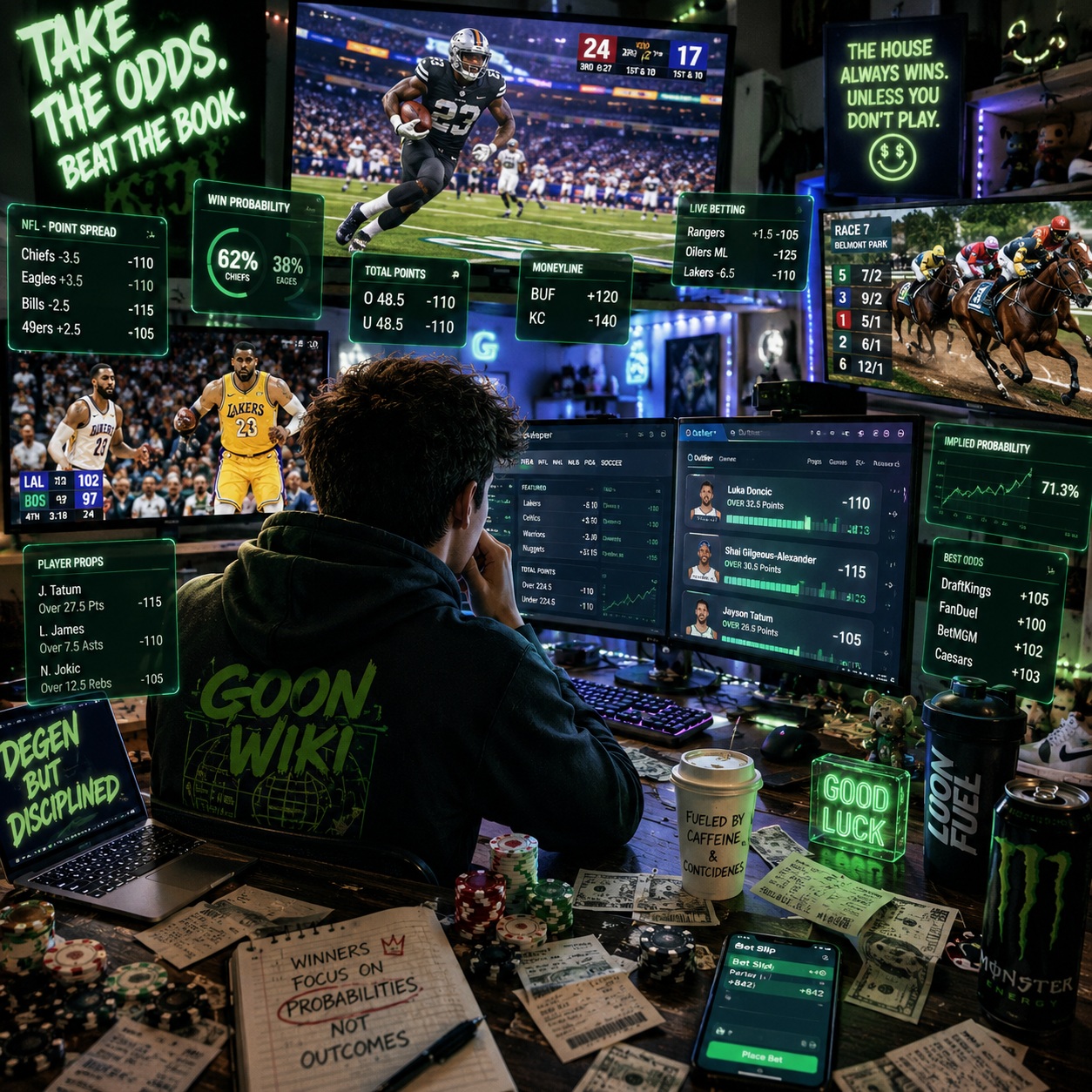
    A same-game parlay is you playing architect and arsonist at the same time. One game, many legs, the number on the button swelling every time you add another prediction. The first time you nail one, it feels stupidly good. Your balance jumps, the group chat lights up, and for a minute you are the oracle at the bar, buying wings and explaining why you saw it coming. That high is honest.

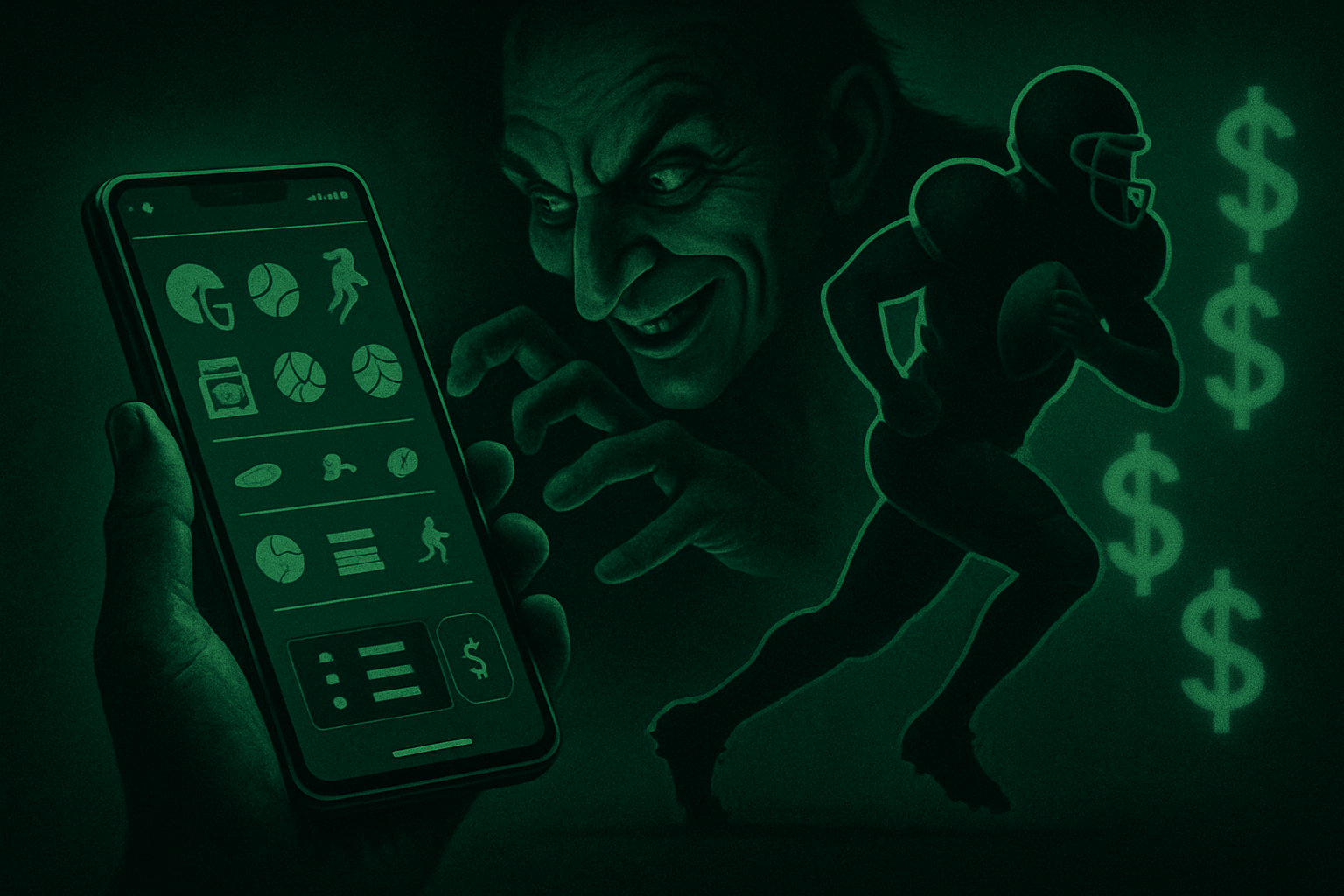
    It is also the bait. The same pleasure that crowns you on Sunday is the hook that keeps you stacking legs on Monday. Five feels brave, six feels brilliant, and then a single busted drive takes three picks down together. You do not lose once. You lose in a small cascade that the app already priced into the glow.

    The turn is quiet, because you start thinking in tickets instead of dollars. You justify a redeposit because four of six hit, because a ref blew a call, because the quarterback slid at the one.

    Then the bill shows up, not as drama but as a late rent notice, a stretched card, and a calendar where game days run your mood. The app will offer cash outs and boosts like life rafts. Most of them are just paid exits from a boat the house sold you with a smile.

    History

    Parlays are old. Bookmakers have long let bettors combine independent wagers for a higher payout with higher risk. What changed in the last decade was the move from separate events to the same event, first popularized by European bet builders where fans could link a side, a scorer, and corners in one ticket.

    When mobile betting spread in the United States after federal restrictions loosened, major operators pushed the idea hard for football and basketball. Same-game parlays landed in ads, pregame shows, and app carousels, selling the feeling that a casual fan could be an offensive coordinator with a calculator.

    The shift needed data. Player props, live feeds, and automated pricing built by quants made it possible to price correlations in seconds. Regulators noticed the marketing surge and the soft edges around words like insurance and risk-free. Warnings and fines showed up in some places while the product kept sprinting, a familiar story where a shiny feature outruns the rulebook.

    Why It Hooks People

    Same-game parlays turn a match into a story you get to write. Sports already run on arcs and heroes, and an SGP lets you script who scores, who shines, and how the clock bleeds out. When it hits, it feels like authorship instead of chance.

    They also scratch the fantasy itch. Years of fantasy and daily fantasy trained people to think in yardage, targets, and rebounds. A parlay feels like drafting a mini roster and chasing a three-hour championship. It is familiar enough to feel safe and different enough to feel thrilling.

    Social proof pours sugar on top. Feeds fill with epic wins, group chats do postmortems, and the quiet losses vanish. Your brain keeps a scoreboard that ignores the denominator while the action density keeps the rush high, every whistle moving two or three legs at once. Habit loops love that intensity and forget the receipt.

    Modern Forms

    Risks and Warning Signs

    The money hit is straightforward. Parlays lose more often, same-game versions stack extra house edge on top, and a few weekends of small slips can eat a paycheck. A hot stretch can hide that reality just long enough to crank stakes and set up a harder fall. Time is the quiet leak. Building tickets, tracking props, and tinkering live can turn one game into an eight-hour chore.

    Partners notice the drift, Mondays punch harder, and you start tying your mood to a backup tight end’s target share. The sport that used to relax you now sets the weather in your head before breakfast. Watch for the spiral. Redeploying deposits during a game, talk of one more leg just to make it interesting, hiding transaction alerts, and telling loss stories that blame a coach or a whistle instead of the math. The long session problem shows up as ten more minutes until the sun is down and your account is down with it.

    The ledger tattles. Multiple small deposits in a day, a credit card cash advance, a paused bill, a borrowed hundred with a fuzzy reason. If you catch yourself lying about why you need to step outside during dinner, you are already paying more than the house edge.

    Harm Reduction

    Treat same-game parlays like a concert ticket. Pick a fixed cost in advance, spend it once, and when the show ends, go home. Pre-commitment beats willpower, and calendar limits beat optimism. Use the tools while calm. Set deposit limits, timeouts, or full self-exclusion before kickoff, not at the two-minute drill.

    Turn off push alerts and promo emails. If you can, keep betting wallets off the device where you watch games. Create friction. Uninstall the app during the season if the pull feels too strong. Move play money to a prepaid card with a hard cap and no overdraft.

    No live betting and no same-day redeposits. If you must place a bet, build it and wait 24 hours before confirming.

    The cooling-off gap kills a lot of bad ideas. Plan for escape hatches that actually close. Self-exclusion works best when the whole local ecosystem honors it, but the self-exclusion gap is real when you can hop to an offshore site or a new email in minutes. Add blocking software, ask one trusted person to hold read-only access to your bank activity for a month, and talk to someone who understands gambling harm. Shame rots in the dark.

    Sunlight lowers the heat.

    Help Resources

    Rendered automatically from the Help Resources field.

    • National Problem Gambling Helpline and local state helplines
    • Gamblers Anonymous and other peer support meetings
    • Self-exclusion programs offered by state regulators and operators
    • Financial counseling and debt advice services
    • Blocking software for gambling sites and apps, such as device-level blockers

    Related Vices and Articles

    How It Works

    A same-game parlay lets you stack multiple legs from one match. You might tie a moneyline to total points and a couple of player props, and the app flashes a growing payout because every condition must be true at once. The number looks like a jackpot, which is the point. Classic parlay math treats legs as independent. Same-game legs are not.

    If a star guard goes off, team totals tend to climb, and if a storm rolls in, passing yards and points can sag together. Books account for these links by blending prices and adding correlation penalties that shrink the true value you think you built. Many prop markets carry higher margins to begin with, and stacking them compounds that cost. The builder leans into craft vibes with sliders, suggested combos, and prebuilt templates that quietly nudge you toward longer slips. Insurance offers and boosts look like gifts, but they are tradeoffs that keep you engaged while raising the effective price of play.

    Live versions add speed to the same game. A big run, a turnover, or a replay review triggers prompts to tack on a leg or cash out early at a discount. It feels like control. Most of the time it is just paying extra rent to leave the store with nothing in the bag.

    Business Model

    Same-game parlays are profit engines because they combine two house-friendly forces. Prop markets usually carry higher hold, and multiplying legs spikes the failure rate. Correlation adjustments widen the margin further. The book is not guessing. It is selling a pretty lottery stitched out of your favorite team.

    They double as marketing. Operators flood feeds with screenshots of rare big hits while broadcasters read odds on air and creators parade their cards. Every post where five dollars turns into a car payment sells the dream, and the quiet landfill of losing slips never appears. Selection bias is not a bug. It is the ad strategy.

    Underneath sits a data economy. Player prop pricing depends on league-licensed feeds and agreements with data firms. The more you slide into props, the more those partnerships pay off. Same-game parlays steer you there one leg at a time.

    Risk controls keep the edges clean. Algorithms cap certain combos, limit max payouts, and throttle accounts that hunt soft spots. Boosts and insurance dial up engagement while nudging up average stake, and the cross-sale loop waits nearby. After a parlay bad beat, the same wallet can open a slot in two taps.

    Psychology

    The hook starts with knowledge pride. Fans believe they see patterns the model misses, and a same-game parlay flatters that belief by turning scattered observations into a neatly priced story. The confirmation feels like respect and it lands fast. Then the app pours gas on it. Pick one leg and suggestions pop up with people also add, while the payout glows greener with every addition.

    It looks like you are building value when what you are actually building is a bigger surface area for bad luck. Near-miss heat keeps you spinning. Four legs hit by halftime, the last one dies by a yard, and your brain tags it as almost. That feels like progress, even though progress did not pay the rent. Losses disguised as wins can add to the confusion when small cash-outs or insured slips get celebrated on screen like a victory even if your wallet shrank.

    There is also relief. Life is loud and messy, and a parlay compresses the noise into a fist-sized ritual. Pick, confirm, watch. The calm is rented, and the price shows up in broken sleep and balance checks between downs.

    Strange Facts and Stories

    Near-miss heat is source_needed. Five legs hit and the last one dies by a yard, and the brain tags it as almost, which feels like learning. It was still a loss. That felt progress is what keeps people negotiating with the screen instead of closing it. Losses disguised as wins is source_needed.

    Some designs celebrate partial outcomes, insured slips, or small cash-outs with lights and green banners that say success even when your wallet is lighter. The sensation of victory without the money is a neat trick if you are the seller. Bonus terms trap is a research lead. The screen says balance, the small print says wagering requirement or review before withdrawal. Players who think they won withdrawable cash can find themselves in a slow email loop about terms they barely saw.

    Account freeze disputes are a recurring research lead in the same neighborhood, triggered by KYC checks, bonus abuse reviews, or sudden closures once a slip gets big.

    Streamer casino sponsorship trail is source_needed. Influencer gambling streams and casino tie-ins have drawn repeated controversy because entertainment and promotion blur into one glowing feed. The viewer watches a show and forgets it is a casino until the deposit button looks like a subscribe button. Curaçao licensing trail is source_needed and crypto casino opacity is a research lead. The homepage can be polished while the legal anchor sits offshore, and fast tokens make deposits and disputes feel slippery.

    None of that is an automatic claim of illegality. It is a reminder that opacity tends to serve the house, not the player. Regulator fine trail is source_needed, but those dry PDFs about ads or social responsibility are often where the real warnings live, not in the smiling commercial with the 48 point insurance.

    Related Articles

    What It Looks Like In Real Life

    It starts sweet. Sunday morning, coffee, you build a little masterpiece. Team to win, star to score, quarterback over, and the payout looks like a new pair of shoes. You hit one early in the season and it feels like the world finally pays you for paying attention, so you screenshot, strut, and sleep easy. Hooked, you chase the echo.

    You add one more leg because the green number jumps in a way your paycheck never does, and the action density keeps you buzzing. Every snap matters, every whistle moves two or three lines at once, and you feel necessary instead of bored. That mood becomes the point. Then the turn. A six legger dies on a garbage time kneel and you swear it proves you were right.

    Next week you redeposit at halftime and build live because the boost clock is ticking and people also add is whispering. Ten more minutes becomes the whole afternoon and Monday arrives on three hours of sleep and a plan to fix it next week.

    The bill does not kick the door in. It taps your shoulder. Rent math starts leaking. Multiple small deposits show up like coffee runs, a card cash advance plants a crater, and a paused bill buys you a week. You borrow and say it is for tires, you sell a gadget you swore you loved, and you hear yourself lie about a deposit like it is normal.

    Now the sport you loved is a mood machine. The team is losing and so are you. The house is not mad. The house is patient.

    Editorial Notes

    AUTO-STUB generated from Sports Betting Apps via modern_forms.
  • Loneliness

    Loneliness

    Loneliness

    Classification

    • Entity Type: Behavior
    • Primary Vice: Lust
    • Secondary Vices: None listed
    • Canonical URL: /loneliness/
    • Importance: Normal

    Overview

    Being wanted feels like heat. A ping, a like, your name said out loud on a stream, a DM with a pet name you paid to unlock. For ten minutes you are taller. Your chest unties. Sleep can wait because the glow is finally on your side.

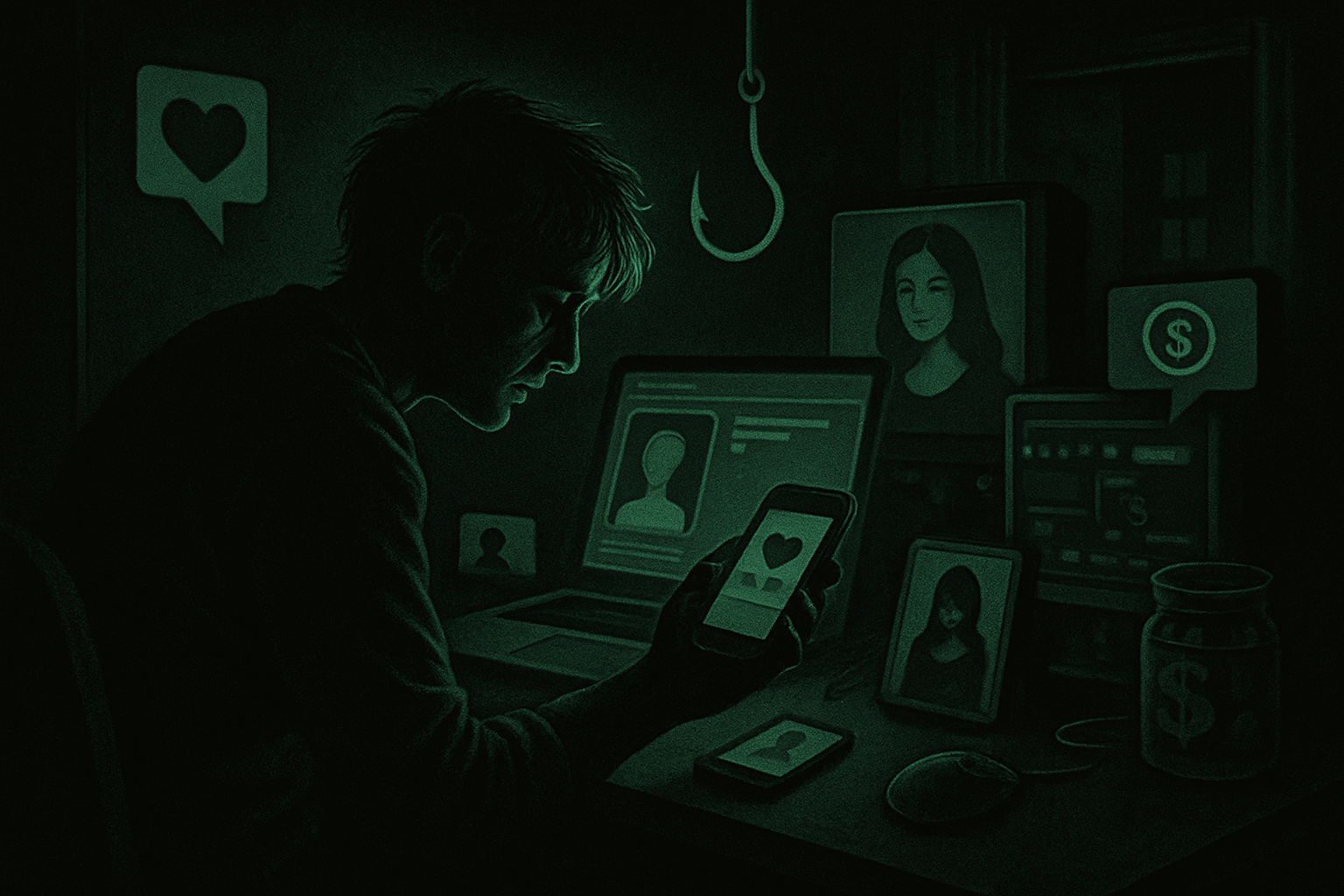
    That same glow is the hook. Swipes run on variable jackpots of attention, so you keep trying. Paywalls around DMs turn closeness into a vending machine. An AI voice never says it is busy, and your brain counts that as mercy. Platforms make money on the approach to connection more than the arrival.

    If you leave with a real person, they lose a daily user. If you stay hopeful and hungry, they win.

    Then the turn. Social pain and physical pain share pathways, so getting ignored lands like a bruise. Hypervigilance kicks in. A late reply reads like contempt. You retreat to protect yourself, which deepens the quiet, which makes you read even more threat.

    Sleep slips, focus frays, and the screen becomes both the problem and the only quick relief. The bill shows up as time blindness and small charges that do not feel small together. Boosts, tips, subscriptions, a second account, a third try at midnight. The market will rent you warmth by the minute. It does not care if you ever get full.

    History

    Humans have always known solitude. What changed was scale and structure. In small bands and villages, isolation was rare and dangerous. You knew your people, for better or worse. Urbanization and industrial schedules created the modern version: anonymous cities, long commutes, private rooms, and time sliced into shifts that rarely aligned.

    By the late 19th and early 20th centuries, writers were already naming a new ache in crowded places. Melancholy got fresh costumes. Boardinghouses, tenements, and then suburban cul-de-sacs traded one kind of crowding for another kind of emptiness. Radio and television offered one-way company, a voice in the room that never asked you a question. In the 1980s and 1990s, loneliness gained price tags you could dial.

    Party lines and 1-900 chat services sold flirtation and conversation by the minute while the meter ticked. The internet brought chat rooms, forums, and early instant messaging that made many people feel seen for the first time, and others more invisible than ever.

    The 2010s turned phones into pocket companions full of swiping, stories, lives, and DMs. Platforms measured social energy by the second and sold access to your attention. Then came pandemic lockdowns that snapped many weak ties and thinned out the third places left. Source needed: the United Kingdom appointing a government role focused on loneliness and a U.S. Surgeon General advisory on social connection signaled that officials were naming the problem.

    The language caught up to the feeling, but the market moved faster than the fixes.

    Why It Hooks People

    Loneliness is painful, and quick relief is cheap. That is the whole trick. The market offers fixes that are immediately available, low effort, and customizable. You can pay to be noticed. You can curate yourself into what you think would be lovable.

    You can stay safe from rejection while simulating company. The brain takes the bargain because it gets a tiny win right now. Intermittent reinforcement is gasoline on this fire. You do not get a reply every time you message a creator or match, and that is exactly what keeps you trying. Variable rewards are stronger than consistent ones.

    A long drought followed by a single ping can light up your week and reset the cycle. Even the hope of a response is a reward state that platforms know how to keep simmering.

    Identity and status sneak in. Swipe stacks and follower counts function like leaderboards. People feel graded and grade others. When you tether self-worth to that scoreboard, you work the system harder and spend more to move up. The idea of being chosen becomes an exhale you chase, not a relationship you build.

    Finally, loneliness thrives in schedule gaps and life transitions: a new city, a job with odd hours, postpartum, illness, caregiving, retirement, grief. In those seasons, you reach for what is nearest. The nearest thing is in your pocket, built by teams whose job is to keep you close. The hook is not romance or sex alone. It is relief.

    Relief is a powerful drug.

    Modern Forms

    Risks and Warning Signs

    The obvious risk is sadness that lingers. The less obvious risk is how loneliness spreads through a life. It can dent immune function, fragment sleep, and erode focus. At work you become present but dulled, missing chances and making small mistakes. The day feels heavy.

    Nights get longer. Mornings arrive late. Money leaks in quiet lines. Ten dollars here for a boost. Twenty there for a subscription.

    A tip to get your message read. A second account because the first one feels burned.

    By the end of the month the labels are different but the math is the same. Groceries get smaller. Rent is a negotiation. You swear you will cut back, then a notification hits at 1 a.m. and the thumb moves on its own.

    Behavior shifts are red flags. You stop returning real-world invitations and tell yourself they were pity offers. You keep secrets about how much time you spend in parasocial spaces. You cancel plans because you are too tired from staying up late with a screen. You tell a family member you were with friends when you were alone.

    The story gets heavier to carry.

    Relationship risks are practical. People can sense when they are being used as medicine. If every conversation is a lifeline, friends burn out. New partners feel like bandages instead of people. You treat them as a cure for a system-level problem.

    That pressure breaks promising connections and becomes proof to your brain that closeness is dangerous.

    Harm Reduction

    Start with honesty that does not punish you. Name the problem out loud to yourself: I am lonely, and my fixes are thin. Write down where the money and hours go. Shame thrives in vague shadows. Specifics make change possible.

    You are not confessing a crime. You are taking inventory. Trade a little precision for a little friction. Turn off nonessential notifications. Move the app icons that own you to a folder so your thumb has to think.

    Set spend limits or blocks on categories that trigger late-night purchases. Use prepaid cards or budgeting apps to create guardrails.

    The goal is not perfection. The goal is to make the impulse walk past a few speed bumps. Practice social laddering. Do not jump from zero to a wedding. Warm up with low-risk ties: wave at a neighbor, say three sentences to a barista, ask one question at a class.

    Attend a recurring group where you can show up without a script. Repetition turns strangers into familiar faces. Familiar faces turn into names. Names turn into people who notice when you do not show.

    Replace thin relief with thicker versions. Swap passive scrolling for active messages to real contacts. Convert a tip to a note to an old friend. Pick one parasocial hour a week and redirect it into a call, a walk, or a local meetup. If you use AI companions, be clear: this is a tool for practicing conversation, not a substitute for human attachment.

    Set timers. If anxiety blocks action, borrow skills. Cognitive and behavioral tools can interrupt the spiral: reality-testing your assumptions, setting small exposure goals, scheduling pleasant events before heavy ones, and preparing exit lines for when energy runs low. If depression or trauma is in the mix, professional support is not a luxury. It is a force multiplier.

    Help Resources

    Rendered automatically from the Help Resources field.

    • Local community centers and libraries that host recurring groups
    • Peer-led support circles or hobby clubs with standing meetups
    • Volunteer organizations offering weekly shifts
    • Primary care referrals and therapy for depression, anxiety, or grief
    • Faith or cultural community gatherings with open attendance
    • Employee assistance programs or mental health benefits at work
    • Campus counseling and student activity groups for those in school
    • Local parks and recreation classes that meet on a schedule
    • Crisis hotlines or text-based support when isolation becomes unsafe

    Related Vices and Articles

    How It Works

    Loneliness is a biological warning signal. When social contact drops, the brain shifts toward self-preservation. Attention tightens, threat detection rises, and sleep quality wobbles. Social pain and physical pain share some neural pathways, which is why a cold shoulder can feel like an actual bruise. The alarm is supposed to push you back into the group.

    The trouble starts when the alarm never shuts off. Hypervigilance makes you read neutral faces as hostile and harmless silence as rejection. That makes you pull back to avoid pain, which deepens isolation, which makes the alarm louder. You end up bracing for the hit that never comes while missing the invitation that did. Modern systems slide into that crack.

    Algorithms learn which notification or image nudges your attention. Swipes deliver intermittent jackpots. A creator reads your username on stream and you feel included for nine seconds. Text feels safer than talk.

    Talk feels safer than meeting. Meeting feels impossible. So you stack low-grade contacts until the day evaporates and the room is still empty. Money plugs into the loop wherever friction is lowest. Boosts on a dating app, a tip to get your message noticed, a subscription for a good-morning DM, an AI companion that never tires of you.

    Each purchase is a micro-bridge over a canyon. It feels better than falling. It also keeps the canyon right where it is.

    Business Model

    Where there is attention, there is a ledger. Loneliness drives repeat engagement, and repeat engagement drives revenue. Platforms monetize the approach to connection, not the arrival. The meter runs while you look for the match, wait for the reply, or try to push your message to the top of a stack. Subscription intimacy is a growth category.

    Paywalls around DMs, voice notes, custom content, and priority placement sell the impression of closeness at a premium. The provider is often a person with their own bills, and the platform keeps a cut of every heart emoji. When you pay to be seen, the algorithm learns that your attention is profitable. You get more prompts and you spend more time near the buy button.

    Dating and social apps often profit from churn. If you find deep connection and leave for good, the product loses a daily active user. So incentives tilt toward keeping you hopeful but unsatisfied. Limited daily swipes, time-limited boosts, and pay-for-visibility features ration the promise. The party never ends because the party never quite starts.

    There is also the commerce built around absence: delivery replacing third places, streaming replacing local scenes, remote gigs replacing coworker banter. None of these are bad on their own. Together, they reduce unplanned contact, the small talk that turns into a big friendship. Fewer incidental ties means more time online. More time online means more inventory to sell you.

    Even public systems can extract. Research lead: phone and video calls for incarcerated people often carry significant fees and add-on charges, turning connection into a toll road for families. When the only bridge charges by the minute, the lonely pay the tax.

    Psychology

    Loneliness has a cognitive signature. People who feel isolated are more likely to interpret social ambiguity as threat. A late reply becomes disinterest. A neutral tone becomes contempt. This bias is not weakness.

    It is the brain conserving energy and avoiding future rejection, but it misfires often enough to become its own loop. Attachment patterns shape the ride. Anxious attachment can drive pursuit and over-disclosure that burns new ties. Avoidant attachment can keep you safe behind work, hobbies, or screens, where nobody can disappoint you because nobody is allowed in. Disorganized histories can make intimacy feel both vital and dangerous.

    In all cases, the goal is the same: security, but the strategies clash with the result.

    Habits form quickly because the relief is real, even when it is thin. A DM ping, a like, a paragraph from an AI that mirrors you back. Dopamine meters effort versus reward. If talking to a bot takes zero social risk and gives you warm words, your brain can prefer it to calling a friend who might be busy. That preference becomes an algorithmic diet: high in novelty, low in nutrients.

    Shame complicates the fix. People lie about loneliness because it feels like an admission of being unwanted. So they hide the purchases and the hours, say they are busy, and make jokes about being introverts while longing for a real hug. Once secrecy enters, you stop asking for help. The room gets darker, and the salesman’s smile gets brighter.

    Strange Facts and Stories

    Source needed: a government role focused on loneliness in the United Kingdom and a U.S. Surgeon General advisory on social disconnection have framed isolation as a public health issue. Why it matters: when officials start naming a feeling, it stops looking like a private defect and starts looking like a system problem, and once something is a system problem, businesses race to sell solutions. Source needed: some AI companion apps reportedly see late-night usage spikes that line up with mood dips, and holiday weeks bring loneliness-themed promos for boosts and paid messages. Why it matters: the calendar and your circadian low become levers.

    Research lead: before apps, party lines and 1-900 numbers charged by the minute for flirtation and companionship, and many callers reportedly wanted conversation more than sex. Why it matters: the meter was always there, the screen just made it portable and personalized. Research lead: Japan’s hikikomori social withdrawal and reports of lonely deaths have drawn policy and media attention for years. Why it matters: cultures invent names for recurring pains, and names change what gets measured and sold back to you.

    Research lead: therapeutic robotic pets have been used in elder care to calm rooms and invite touch, while critics worry about replacing people. Why it matters: substitutes can soothe, but they also teach the nervous system to accept a plug where a person might be. Research lead: agencies in Japan and elsewhere have reportedly rented stand-in family members for events or companionship. Why it matters: when shame blocks asking for the real thing, loneliness gets outsourced to actors. Research lead: phone and video calls for incarcerated people often carry significant fees and add-on charges, turning connection into a recurring household cost.

    Why it matters: love becomes a bill you budget for. Research lead: tipping ladders, badges, and leaderboards on livestreams convert need into a public status game you can lose by sleeping. Why it matters: visibility is gamified so you spend to stay seen.

    Related Articles

    What It Looks Like In Real Life

    The high starts simple. Friday night, you are cracked open from a quiet week. A creator says your handle into the mic after a small tip and your whole body lights like someone flipped a breaker back on. You toss another few dollars to keep the feeling talking and tell yourself this is harmless medicine. The hook slides in.

    You message a match and get nothing. You buy a boost and get two quick hearts and one tepid hello on Sunday. Intermittent wins keep you grinding, so you pay to push your DM higher. You stay up because the next ping might be it. The bed is two feet away but the phone is warm and the room is not.

    The turn shows its teeth on a Tuesday. A friend texts with a period and you read it like a slap. You cancel plans before they can cancel on you and feel clever for dodging the hit. That night you talk to a bot because it will never go quiet on you. Sleep traded for pings, morning traded for fog, a real voicemail from a real person missed because you finally passed out.

    The bill arrives quietly. Groceries shrink. The bank feed looks like someone else is nickeling you to death. You are late to work twice and say nothing. A date senses the pressure to fix your ache and ghosts.

    That becomes proof your brain uses to lock the door tighter. The next night you chase status in a streamer chat so your name does not slide off the screen. You buy the higher badge, then buy again when someone jumps you on the board. You know it is dumb. You do it anyway.

    Side scene, same city: a grandmother reloads a prepaid account so her grandson can call from inside. The price makes her pick between hearing his voice and seeing her doctor this month. Love as a metered service is still love, and it still takes from somewhere. One more scene, a small claw-back. You shove the apps into a folder named Cold Shower and kill previews so your thumb has to think.

    The extra taps buy you a few seconds on a few nights. Not a cure, but sometimes enough to let the urge pass and the room stay quiet.

    Editorial Notes

    AUTO-STUB generated from Parasocial Relationships via related_articles.

  • Sports Betting Apps

    Sports Betting Apps

    Sports Betting Apps

    Classification

    • Entity Type: Platform
    • Primary Vice: Greed
    • Secondary Vices: Gluttony, Wrath
    • Canonical URL: /sports-betting-apps/
    • Importance: Normal

    Overview

    Sports Betting Apps is a Goon Wiki knowledge node. This placeholder overview validates the article layout before AI-generated copy is connected.

    History

    History placeholder text for Sports Betting Apps. This section will describe older versions, cultural context, and how the behavior or phenomenon evolved.

    How It Works

    Mechanics placeholder text for Sports Betting Apps. This section will explain how the system, product, or platform works.

    Why It Hooks People

    Psychology placeholder text for Sports Betting Apps. This section will describe incentives, emotional triggers, habit loops, variable rewards, and environmental design.

    Commercial Ecosystem

    Commercial ecosystem placeholder text for Sports Betting Apps. This section will describe who profits, how it is marketed, and what incentives keep it growing.

    Risks and Criticism

    Risk and criticism placeholder text for Sports Betting Apps. This section will describe major critiques, concerns, and controversies.

    Harm Reduction

    Harm reduction placeholder text for Sports Betting Apps. This section should provide neutral, practical, non-shaming ways to reduce harm.

    Related Articles

    Editorial Notes

    Test article for gambling/platform template.