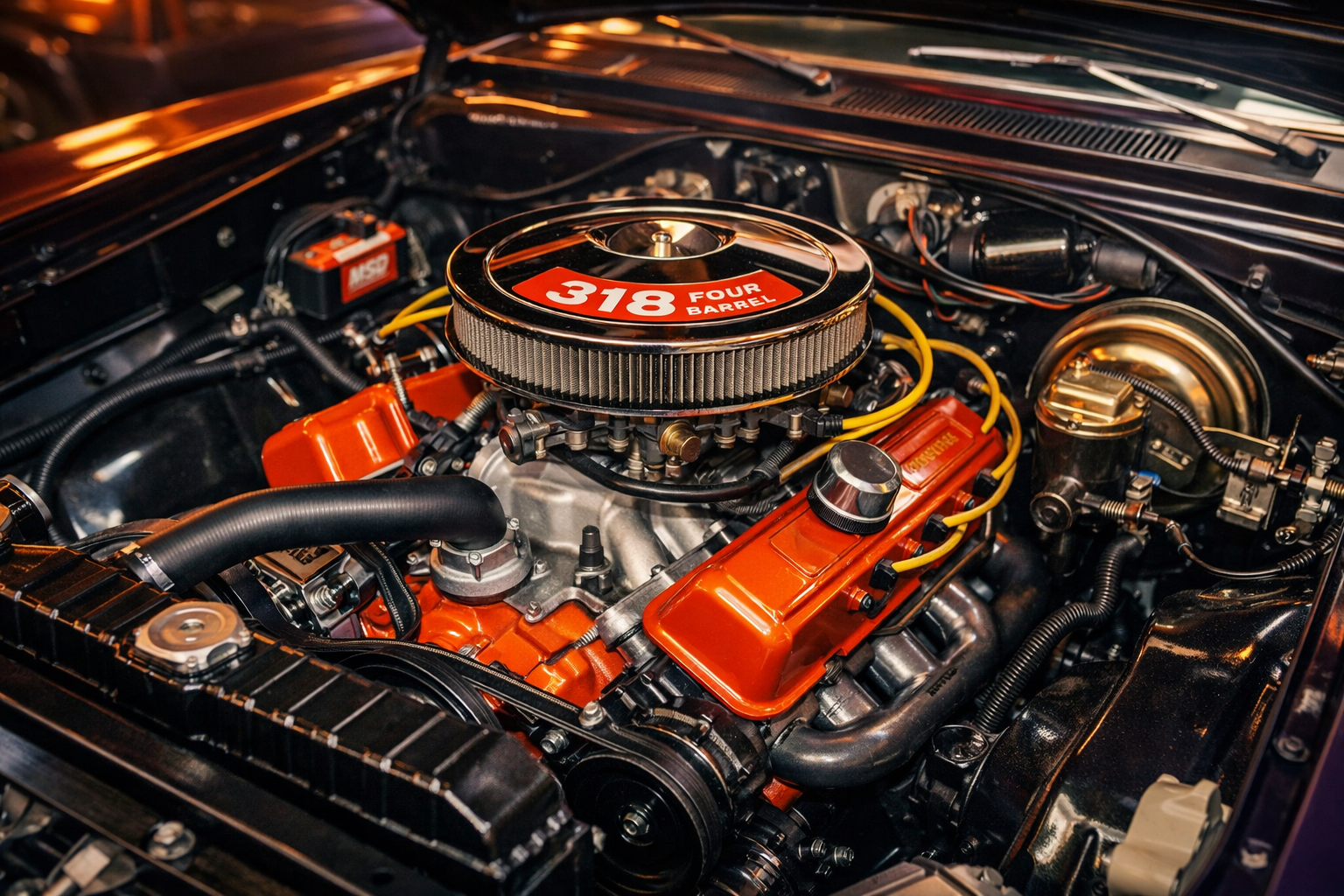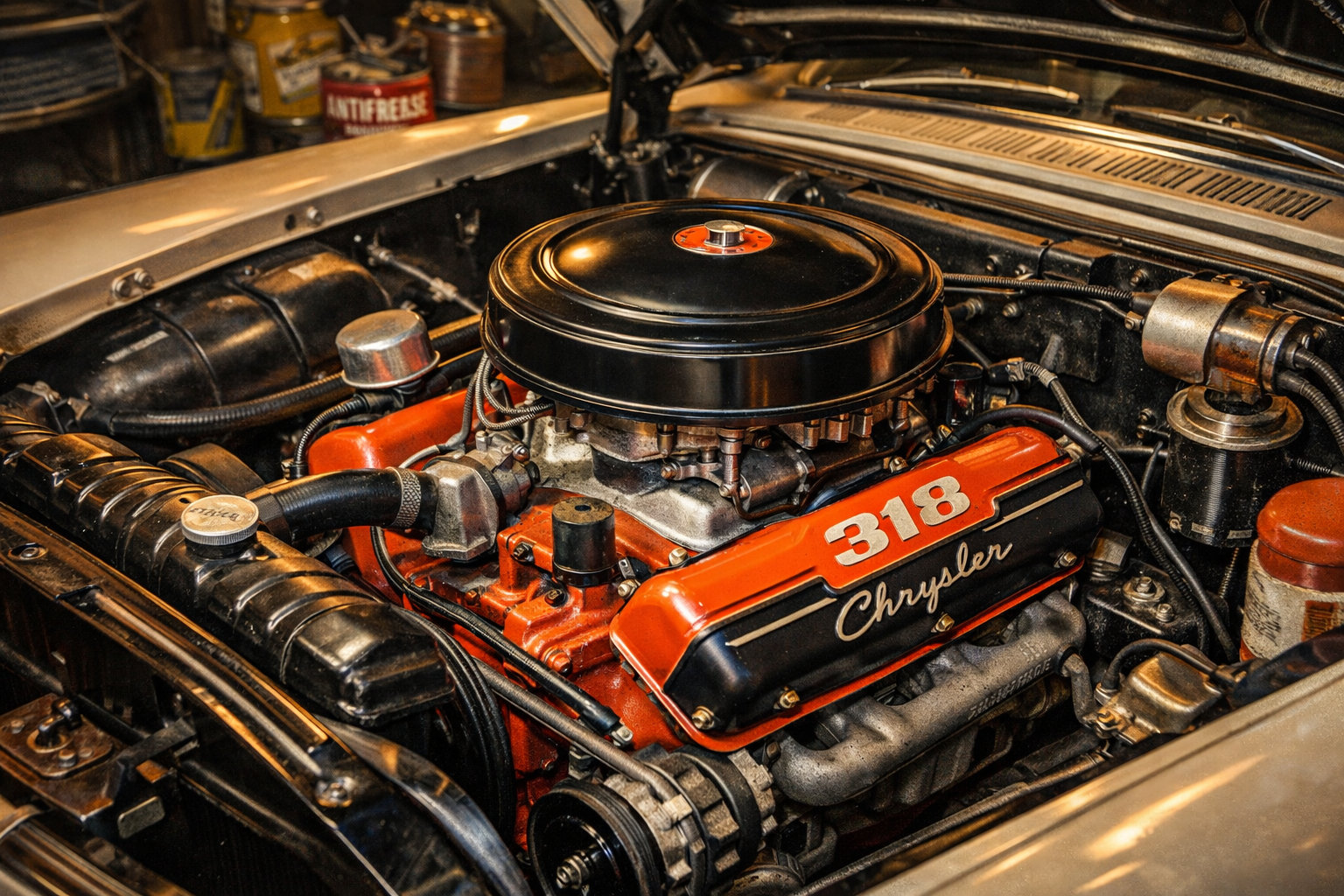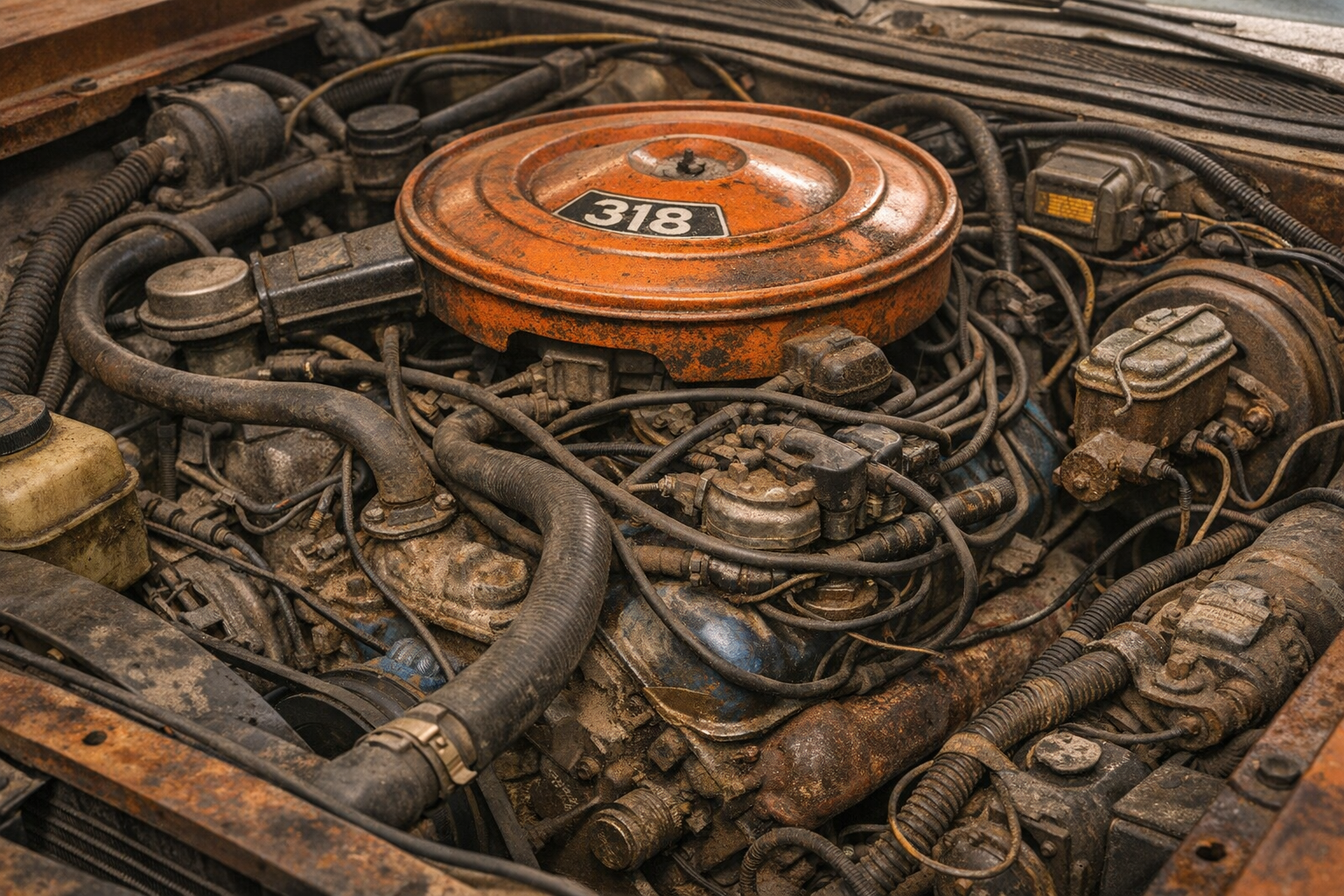
318 V8 Timeline
The 1970s: Emissions, Detuning, and the 318’s Survival
As emissions laws tightened and horsepower numbers dropped, the Chrysler 318 adapted to a changing world—trading performance for longevity while quietly becoming one of the most dependable engines of its era.
The 1970s were not kind to performance engines. New emissions regulations, rising fuel costs, and shifting consumer priorities forced automakers across the industry to rethink everything. Horsepower numbers dropped almost overnight, compression ratios fell, and engines that once defined power became quieter, more restrained versions of themselves. The 318 was not spared from these changes—but it handled them better than most.
Chrysler engineers retuned the LA 318 to meet new standards, adding emissions equipment, reducing compression, and softening its output. On paper, the engine looked weaker than before. But in reality, something more important was happening. The 318 was learning how to survive in an environment that killed off less adaptable designs.
Where other engines struggled with reliability under new constraints, the 318 leaned into its strengths. Its simple architecture, forgiving nature, and strong bottom end made it resilient even when saddled with early emissions systems. It may not have been exciting, but it was dependable—and that mattered more than ever in a decade defined by uncertainty.
Power Down, Reliability Up
The detuned 318 became known for something different than performance: consistency. It started in the cold, idled without complaint, and kept running long after flashier engines had worn themselves out. In a time when drivers were dealing with fuel shortages and economic pressure, that kind of reliability carried real weight.
It also became a common sight under the hood of everyday vehicles—sedans, wagons, trucks, and vans that needed to function first and impress second. The 318 fit that role perfectly. It was not trying to win races anymore. It was trying to get people where they needed to go, every single day.
Endurance Over Excitement
The 1970s reshaped how engines were judged. Raw horsepower was no longer the only measure of success. Durability, efficiency, and compliance became just as important. The 318 adapted to this new reality without losing its identity. It remained a V8 with character—but now it was one built to endure rather than dominate.
This period cemented the 318’s reputation as a survivor. It proved that even when conditions changed dramatically, the engine could evolve and remain relevant. That ability to endure would carry it into the next decade, where it would once again find new purpose in a rapidly modernizing automotive world.